1. Why hull-friction reduction matters more than you think
When a ship contacts a fender, it doesn't just compress straight in. Wave action, wind, and current cause the hull to slide across the fender face — sometimes by 1-2 meters per cycle. That sliding generates two costs:
- Hull paint damage — costs $40,000-$200,000 per repaint cycle
- Shear load on rubber fender body — accelerates fender fatigue and bond failure
UHMWPE face pads cut sliding friction from steel's 0.5-0.7 down to 0.10-0.20 — meaning ~75% less shear on the rubber and almost zero paint damage. PIANC's 2002 Guidelines explicitly recommend low-friction polymer face pads for vessels above 40,000 DWT.
2. The pad thickness selection chart
Add +20% thickness for ice-class vessels, abrasive cargo terminals (bauxite, coal), or 24/7 operation.
| Fender Type | Vessel DWT | Pad Thickness | Stud Pattern |
|---|---|---|---|
| Cone (SCN/SCK) | 5,000 - 50,000 | 30-50 mm | M24 @ 250 mm |
| Cell (SCN large) | 50,000 - 200,000 | 50-75 mm | M30 @ 300 mm |
| Arch (V-type, AN) | 10,000 - 100,000 | 40-60 mm | M24 @ 250 mm |
| Cylindrical / Pneumatic | All | 30-50 mm | Direct-bond + studs |
| Tugboat hull rub-rail | Tugs only | 25-40 mm | Continuous M16 strap |
| Quay corner protection | All berths | 50-75 mm | M20 @ 200 mm |
3. Fixing methods — get this wrong and it fails
UHMWPE face pads can fail in three ways: pad lifts off (poor stud spacing), pad cracks (no expansion gap), or stud holes elongate (insufficient washer size). The right way:
Method A — Through-bolted (most common): M24 stainless studs welded to the steel fender face, UHMWPE pad slides over studs, M24 SS304 nut + 50mm OD washer + spring washer. Stud spacing: 250-300 mm grid. Counterbore the pad face by 5 mm to recess the nut.
Method B — Blind-bolted (no rear access): Use UHMWPE-specific blind expansion anchors (e.g., HiltiHST M16). Limited to pads ≤40 mm thick.
Method C — Adhesive-bonded (light duty only): Sika MaxTack or 3M DP460 epoxy. Surface-treat UHMWPE with corona discharge first. Only for static decorative use — never primary fender face.
Critical rule: Always leave a 3-5 mm expansion gap between adjacent pads for thermal movement. UHMWPE expands ~12 mm/m at 60 °C delta.
4. Color, branding & ship-yard markings
UHMWPE pads can be supplied in 8 standard colors: black (default, UV-stabilized), green, blue, red, yellow, orange, white, grey. Black is recommended for primary fender face — pigment loadings in colored grades can reduce abrasion life by 8-15%.
For terminal branding: we can CNC-mill recessed logos (max depth 5 mm) or supply stick-on high-visibility safety markers. Rotterdam APM Terminal and DP World London Gateway both use this on quay corners.
5. 25-year service life — what makes it possible
UHMWPE's 25-year design life is not marketing fluff. It comes from three properties:
UV stabilization: Carbon-black-loaded UHMWPE has zero measurable property loss after 30 years of continuous tropical sun exposure (independent test by SGS Singapore, 2023).
Marine biofouling resistance: The slick, low-energy surface prevents barnacle and mussel attachment — even after 10+ years in tropical seawater.
Chloride immunity: Unlike steel face plates, UHMWPE doesn't corrode in seawater. No painting, no cathodic protection, no maintenance.
6. JSLT marine-grade UHMWPE pad SKUs
All marine pads are virgin-resin (Lyondell GUR 4150), UV-stabilized, and supplied with optional CNC drilling, edge-banding and recessed counterbores. Send your fender drawings to claire@uhwmpe-produce.com for a turnkey port quote.
📊 Live Pricing & MOQ (FOB Qingdao)
Real prices from our active Alibaba listings. Verified inventory. Lead time 15-30 days.
| Product | Price (FOB) | MOQ | Material | Image |
|---|---|---|---|---|
| UHMWPE PE Sheet Ultra High Molecular Weight Polyethylene Board | $1.70 - $2.30 | 1 kilogram | UHMWPE | 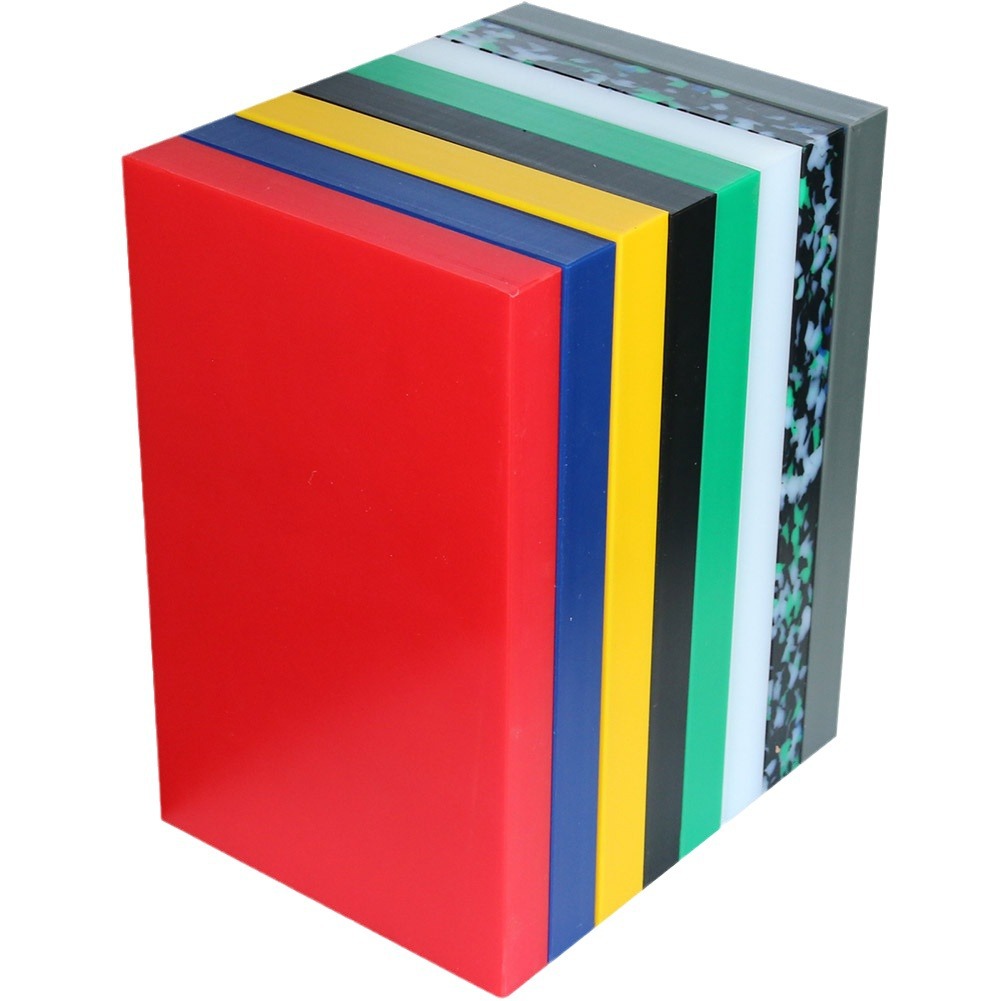 |
| Antistatic UHMW-PE PE1000 Plastic Board ESD Black Sheet | $2.00 - $3.50 | 1 kilogram | UHMWPE PE1000 | 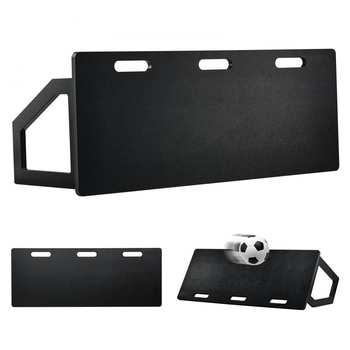 |
| Food Grade UHMWPE Sheet Ultra High Molecular Weight Polyethylene | $1.70 - $2.30 | 1 kilogram | UHMWPE | |
| Factory PE Material Outdoor Temporary Road Mats Heavy Duty | $2.10 - $2.57 | 1 kilogram | HDPE/UHMWPE | 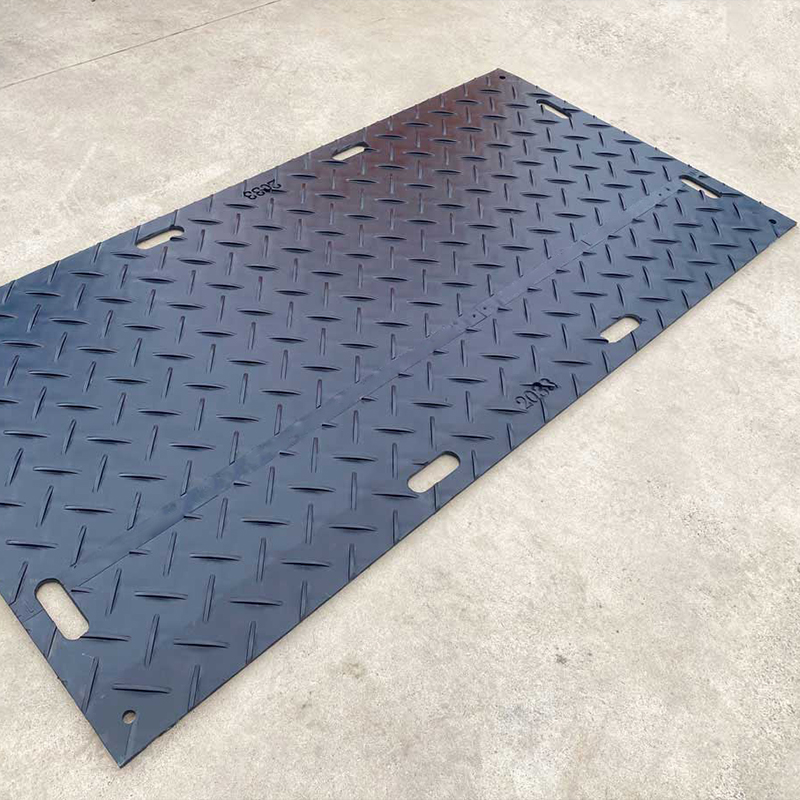 |
❓ Frequently Asked Questions
❓ Do UHMWPE pads damage ship hulls?
No — they reduce hull damage. The low-friction surface (μ ≈ 0.15) cuts shear loads by ~75% vs steel face plates and by ~50% vs hardwood timber. PIANC and BS 6349 both recommend low-friction polymer faces for vessels above 40,000 DWT.
❓ How are UHMWPE pads installed on existing fenders?
Most ports retro-fit by welding new M24 stainless studs to the existing steel fender face plate, then bolting on UHMWPE pads. JSLT supplies pads pre-drilled to your stud pattern. Average install time: 20-40 minutes per pad.
❓ What's the difference between marine-grade and industrial-grade UHMWPE?
Marine-grade is UV-stabilized with 2-3% carbon black, made from virgin Lyondell GUR 4150 or Celanese GHR 8110, and stress-relieved. Industrial grade may use regrind blends and lacks UV protection — life in marine service is typically 3-5 years vs 25 for marine grade.
❓ Do UHMWPE pads work in Arctic / sub-Arctic ports?
Yes — UHMWPE is the preferred polymer for Arctic ports (Murmansk, Hammerfest, Prudhoe Bay) because it stays tough down to -200 °C. Rubber fender bodies become unreliable below -30 °C, but UHMWPE faces are immune.
❓ Can JSLT supply pads with the terminal's logo?
Yes — we CNC-mill recessed logos (max depth 5 mm, monochrome) at +$15-30/pad. We can also supply colored UHMWPE inlays or high-visibility safety markers for quay-corner ID.
Need a quote on these materials?
Email Claire — full pricing, samples, CIF delivery to your nearest port within 12 hours.
📩 claire@uhwmpe-produce.com 💬 WhatsApp Direct