But the two materials behave very differently in real industrial service. Picking the wrong one can mean a chute liner that fails in 6 months instead of 6 years, or a cutting board that warps the first time it touches hot food. This guide gives you the 8-criteria decision matrix our engineers use every day at JSLT Polymers when a buyer asks: 'Should I order UHMWPE or HDPE?'
1. The 30-second answer
Choose UHMWPE when wear life, impact toughness, low friction or sub-zero service is critical. Typical use cases: mining chute liners, truck-bed liners, marine fender face pads, food-machinery wear strips and outrigger pads.
Choose HDPE when you need a cheaper, easier-to-machine, food-safe sheet for static or low-wear applications. Typical use cases: cutting boards, marina dock panels, playground panels, chemical-tank linings and prefab construction.
Price difference at JSLT factory gate: HDPE starts around $1.10/kg, UHMWPE starts around $1.70/kg. So UHMWPE costs ~55% more — but for demanding wear duty it lasts 3-8× longer, making it cheaper per service hour.
2. What makes UHMWPE different from HDPE?
Both polymers are made from ethylene monomer, but the molecular weight is dramatically different:
- HDPE molecular weight: 200,000 – 500,000 g/mol
- UHMWPE molecular weight: 3,000,000 – 6,000,000 g/mol (10-20× higher)
That extra-long molecular chain creates dense entanglement in the solid state. The result: UHMWPE has extreme abrasion resistance (better than carbon steel in many slurry applications), stays tough at -50 °C, and has a self-lubricating surface with friction coefficient as low as 0.1 against steel.
The trade-off: that same long chain makes UHMWPE harder to extrude (needs ram or compression-molding instead of standard extrusion), so processing costs are higher, and you can't blow-mold complex shapes.
3. Side-by-side technical comparison
Source: JSLT Polymers internal QA test data (ASTM D1709, D256, D1894) cross-referenced with public Lubrizol and Röchling datasheets.
| Property | HDPE | UHMWPE | Winner |
|---|---|---|---|
| Density (g/cm³) | 0.94 - 0.96 | 0.93 - 0.94 | Tie |
| Tensile strength (MPa) | 22 - 31 | 21 - 40 | UHMWPE |
| Notched Izod impact (J/m) | ~50 | No break | UHMWPE |
| Abrasion (sand-slurry index) | 100 (baseline) | 500-800 | UHMWPE |
| Friction coefficient vs steel | 0.25 - 0.30 | 0.10 - 0.20 | UHMWPE |
| Service temperature (°C) | -50 to +80 | -200 to +80 | UHMWPE |
| FDA / food contact | Yes (white) | Yes (white/blue) | Tie |
| Machinability | Excellent | Good (sticky chips) | HDPE |
| Price ($/kg, FOB Qingdao) | $1.10 - 1.50 | $1.70 - 2.40 | HDPE |
| Typical service life vs steel | 1.5× | 5-8× | UHMWPE |
4. The 8 selection criteria — apply them in order
Use these as a yes/no flow chart. The first 'YES' tells you which material you need:
- Sub-zero service? (below -40 °C) → UHMWPE
- Sliding/impact wear? (chutes, liners, ore contact) → UHMWPE
- Friction control critical? (need self-lubrication) → UHMWPE
- Need to weld/thermoform? (complex shapes) → HDPE
- Static panel/structural only? (no wear) → HDPE
- Tight budget, low-spec replacement? → HDPE
- Food-contact cutting/chopping surface? → HDPE (easier to resurface)
- Food-machinery wear part? (gears, scrapers in continuous service) → UHMWPE
5. Real-world cost-per-service-hour analysis
A common misconception: 'HDPE is cheaper, so it's cheaper.' For static parts, true. For wear parts, false. Here's the math from a 2025 case at a Brazilian iron-ore loading terminal we supply:
| Liner Material | Sheet Price | Service Life | Cost per Year |
|---|---|---|---|
| 10mm AR400 steel plate | $185 / m² | 9 months | $247 / m² |
| 20mm HDPE sheet | $42 / m² | 14 months | $36 / m² |
| 20mm UHMWPE sheet | $72 / m² | 52 months | $17 / m² |
The HDPE option looks cheap until you see how often you replace it. UHMWPE wins by 2.1× in this duty cycle — and that doesn't even count the labor cost of swapping liners.
6. Common mistakes when buying from China
After 18 years of exporting, we see the same three mistakes from Western buyers:
Mistake 1: Asking for 'PE sheet'. 'PE' covers everything from LDPE shopping bags to UHMWPE bullet armor. Always specify the molecular-weight class — UHMWPE (PE-UHMW), HMWPE (PE-HMW), or HDPE (PE-HD).
Mistake 2: Accepting recycled UHMWPE. Some suppliers blend up to 30% regrind into 'virgin UHMWPE' to hit lower prices. The result: lower abrasion life, brittle in cold. Always ask for a virgin-resin certificate (we use Lyondellbasell GUR or Celanese GHR).
Mistake 3: Skipping the GSM check. A '20mm' sheet should weigh ~19 kg/m² for UHMWPE. If it's significantly lighter, the supplier may be foaming or under-extruding it. Always weigh a reference cut at goods-in.
7. JSLT recommended SKUs (real factory pricing)
Below are our most-ordered UHMWPE and HDPE SKUs with current FOB Qingdao pricing. Prices update monthly — for a CIF quote to your port, email claire@uhwmpe-produce.com.
📊 Live Pricing & MOQ (FOB Qingdao)
Real prices from our active Alibaba listings. Verified inventory. Lead time 15-30 days.
| Product | Price (FOB) | MOQ | Material | Image |
|---|---|---|---|---|
| UHMWPE PE Sheet Ultra High Molecular Weight Polyethylene Board | $1.70 - $2.30 | 1 kilogram | UHMWPE | 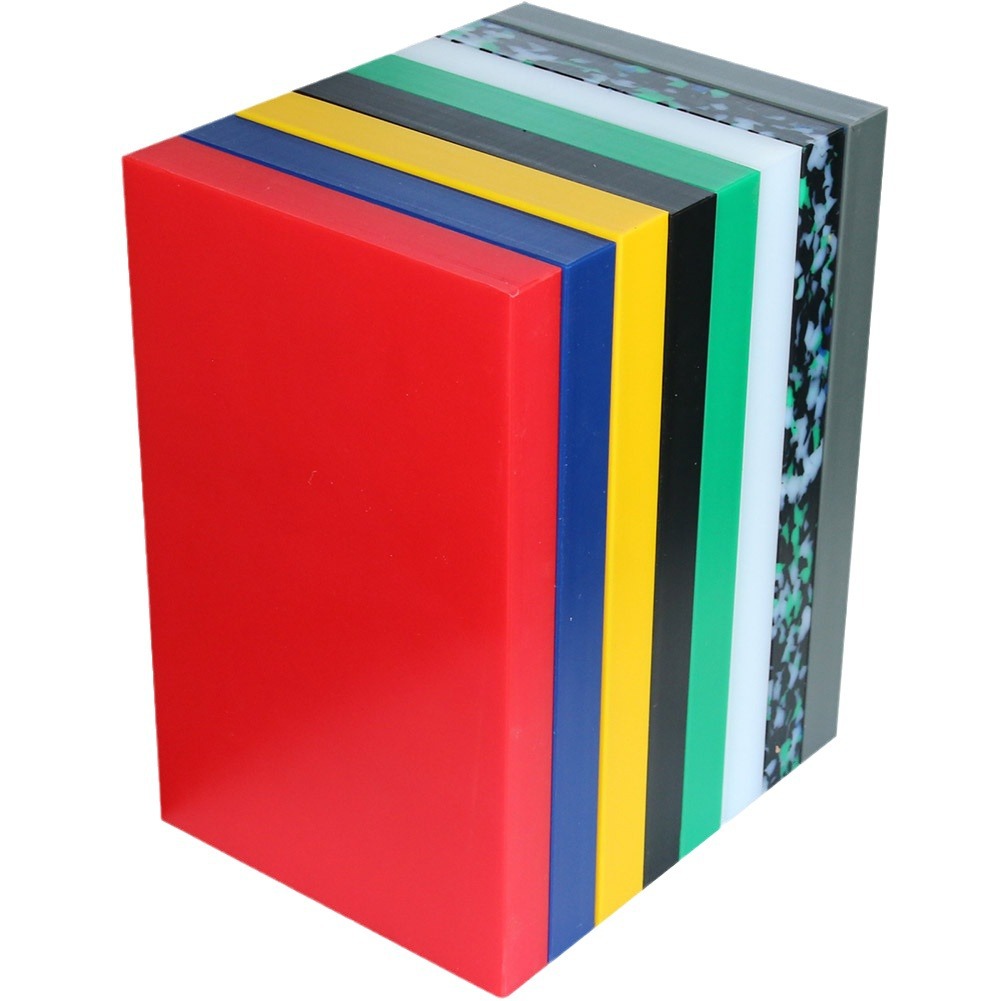 |
| Antistatic UHMW-PE PE1000 Plastic Board ESD Black Sheet | $2.00 - $3.50 | 1 kilogram | UHMWPE PE1000 | 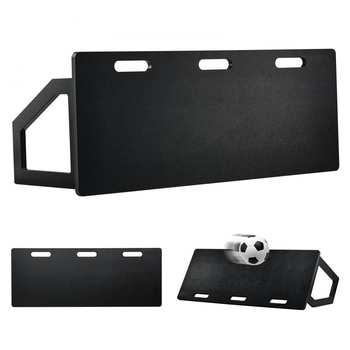 |
| Food Grade UHMWPE Sheet Ultra High Molecular Weight Polyethylene | $1.70 - $2.30 | 1 kilogram | UHMWPE | |
| Factory PE Material Outdoor Temporary Road Mats Heavy Duty | $2.10 - $2.57 | 1 kilogram | HDPE/UHMWPE | 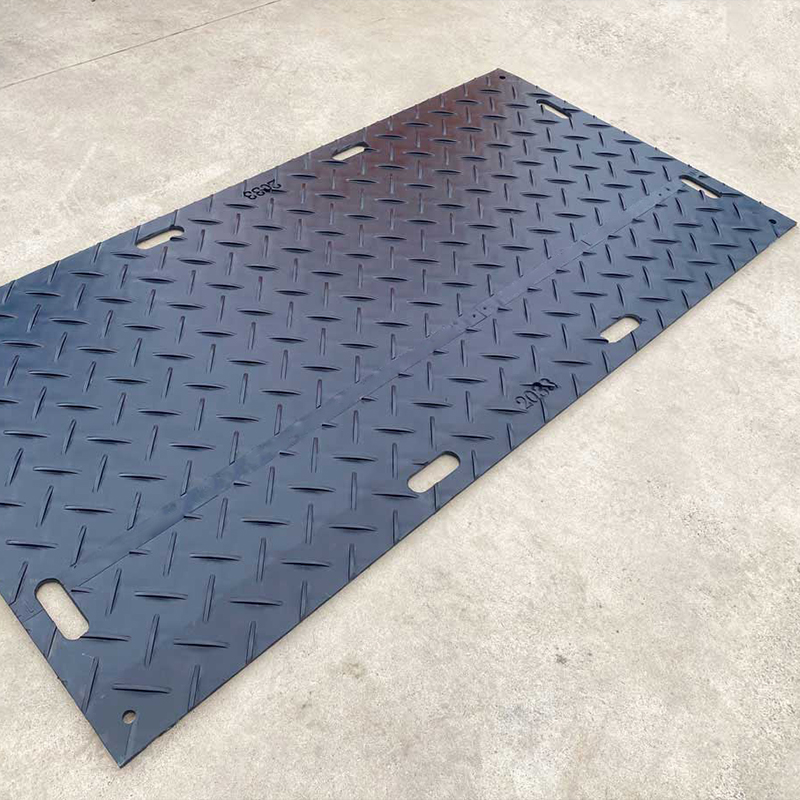 |
❓ Frequently Asked Questions
❓ Is UHMWPE the same as PE-1000?
Yes — UHMWPE, PE-UHMW and PE-1000 are interchangeable trade names. The '1000' refers to molecular weight in thousands of g/mol (>1,000,000 g/mol qualifies as ultra-high). At JSLT we typically supply 4-9 million g/mol grades.
❓ How do you join UHMWPE panels?
JSLT does not weld UHMWPE — the polymer's near-zero melt flow makes any heat-fused joint unreliable in service. We connect panels with countersunk M16 stainless bolts on a 200-300 mm grid (standard mining/conveyor practice), or with stainless tee-bolt keepers welded to the steel substrate. If your application truly needs a welded plastic fabrication (tanks, ducts, scrubbers), specify HDPE or PP instead and we'll supply matching welding rod.
❓ Is HDPE food safe at high temperature?
Standard HDPE is FDA-compliant up to ~80 °C in food contact. Above that, HDPE softens and can leach. For continuous hot-food contact use polypropylene (PP) or PEEK instead.
❓ Which material wears better against wet sand?
UHMWPE — by a factor of 5-8× over HDPE in slurry abrasion testing (ASTM G65). The water film creates hydrodynamic lift that enhances UHMWPE's already-low friction.
❓ Can I order mixed UHMWPE + HDPE in one container?
Yes. JSLT regularly mixes both materials in 20'/40' FCL shipments. Minimum order is 1 kg per material; full container ~22 tonnes. Ask Claire for a mixed-cargo quote.
Need a quote on these materials?
Email Claire — full pricing, samples, CIF delivery to your nearest port within 12 hours.
📩 claire@uhwmpe-produce.com 💬 WhatsApp Direct